Showing posts with label Japan. Show all posts

26.5.14

Layer upon Layer. Daisuke Yokota's Haunting Places


I dream, therefore I am.

August Strindberg


Playing with memory, elusiveness and loss, Yokota opens the shutter on sublime mindscapes where time and space blur and collapse. Through an intense processing of reworking his material digitally, in his darkroom, or by rephotographing it several times, he emphasizes his understanding of photography as a medium that irrevocably escapes you. In an interview with Peggy Sue Amison he further explains: "When you're going to sleep, you think about the stuff that happened to you that day. You might see some images but they're completely distant from what really happened- they're hazy. You're trying to recall something, and photography can also recall things in this way.(...) I think using these effects of delay, reverb and echo - in photographic terms, developing the film 'badly' and so on, might be a way to alter the sensation of time in a visual way."


FOAM*

Daisuke Yokota
Site/Cloud

16 May 2014 - 06 July 2014


FOtografiemuseum AMsterdam
  Keizesgracht 609
 Amsterdam


*Free guided tour and dinner with organic food every Thursday evening in Foam café.


1, 2 Photograhs © Daisuke Yokota, G/P Gallery
3 Photograph © J'attends...

18.11.13

To the Unknown Friends. Kaori Tatebayashi's World of Clay


To Ink


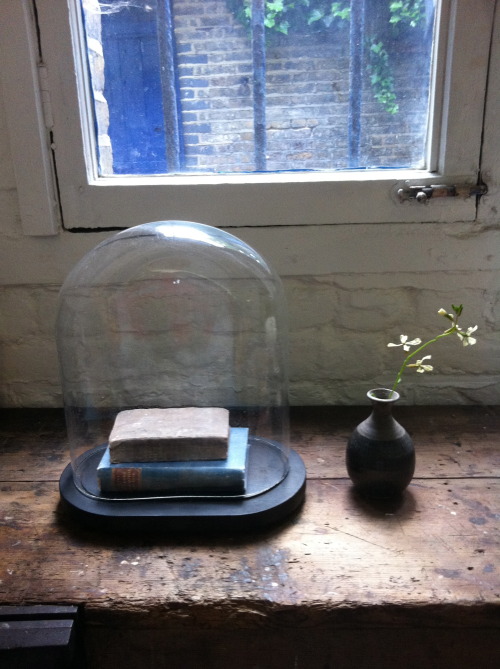
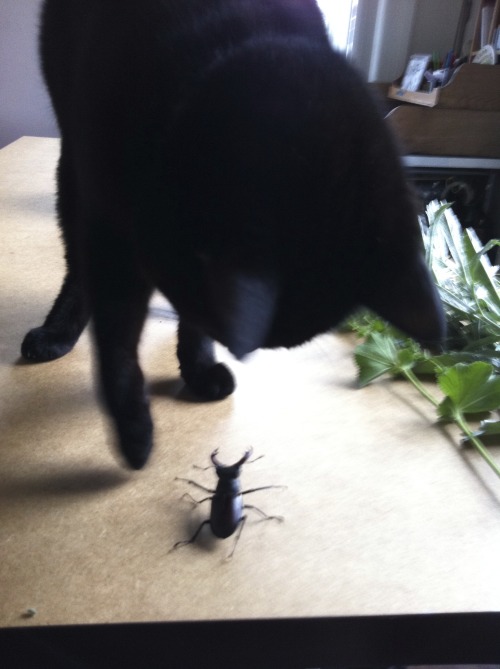
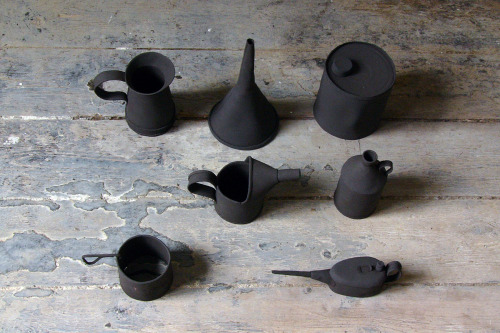
Kaori Tatebayashi grew up in the Japanese village of Arita famous for its Imari ware. As a child, she spent a great deal of time playing in the pottery factory of her relatives. She breathed the atmosphere of ceramics making mesmerized by the work of the craftsmen. I imagine her sitting near the potter's wheel, silent as a cat, unobserved and totally absorbed in the assimilation of all she could sense. Her work is fed by the thousand details of her daily life in South London - a squirrel paying a visit to her Austin roses, her black cat sniffing a stag beetle, a black bird filling his chubby cheecks with grains, baby pigeons playing hide and seek in the dusk. Nature is omnipresent in her work. Creating her pieces of clay is a way for her to encapsulate and to transform the memory of her chidhood landscapes. She explains how the pattern of Kage plate, named after the Japanese word shadow was inspired by the silhouette of a plant. Similarly, the edges of Kumo series resemble mountain ridges. Browsing through the pages of her Tumblr is like being admitted to have a  peek at her sketchbook, to share some of her inner world and harmony power. To me it is an endless source of joy and meditation. It is like tasting the essence of Japanese Spring.   


 Photographs © Kaori Tatebayashi


14.2.13

Lost in Imagination. Motojirô Kajii's Second Sight


I built a strange and fantastic castle, mixing reds and blues throughout.

Motojirô Kajii, Lemon, 1925*


On that day, I was unusually doing my shopping at that particular shop. In doing so, I discovered a most rare lemon. Lemons are pretty common. This shop was not particularly shabby, no different to any other greengrocer and so I had not spent time browsing here before. Oh how I loved this lemon! The colour of this lemon was exactly like simple, solid lemon yellow paint squeezed right out the tube…taking the form and shape of a spindle… Eventually I decided to buy this single item. From here, I wondered where would I go? I walked down a street for a long time. The continuous oppressive pressure of the ominous lump on my heart that seemed to slacken ever so slightly, just for an instant, which made me wonderfully happy. To the extent that for the first time I was distracted from the persistent depression, I perhaps should have been doubtful that this lemon brought so much happiness, but it was paradoxically real.


*Amateur translation of Lemon by an English student 
at Nagoya University, 2010
Another amateur translation to be found here.


Lemon, edition Cold Green Tea Press
translated by Chinatsu Komori and Kenneth Traynor


A poor and ill young man roaming through the streets of Kyoto stops by a greengrocer and buys a lemon. He becomes fascinated by the commonplace piece of fruit and begins seeing it as a bomb ready to explode. Kajii's work Remon (The Lemon) has become a major reference* in Japonese modernism.


Quand regarder intensément devient la seule manière vivante de vivre... 


*A discussion of the short story with Suzuki Sadami, author of a dissertation on Motojirô Kajii, The world of Motojirô Kajii, p.21


T. Enami, A fruit seller in Old Japan, Okinawa Soba
Cy Twombly, Lemons, Gaeta, 2005, Color dry-print, Collection Cy Twombly, Foto: Archiv Nicola del Roscio, Rom, © Cy Twombly.
3 Cy Twombly,  Lemon, 2008, © Cy Twombly.
4 T. Enami,Bamboo alley of Kyoto, Okinawa Soba
5 Motojirô Kajii, photo Wikipedia, author unknown


Liens: Okinawa Soba, Flickr et blog de Okinawa Soba sur T. Enami 


19.11.12

The Birth of Gravity. Yuriko Takagi's Dialogue with the Earth

“It was less like seeing than like being for the first time seen,

knocked breathless by a powerful glance.” 


Photographies Yuriko Takagi, The Birth og Gravity, silverprints made by the artist and inkjet prints on diasec, edition of 10 or 4. Courtesy Galerie Lazarew


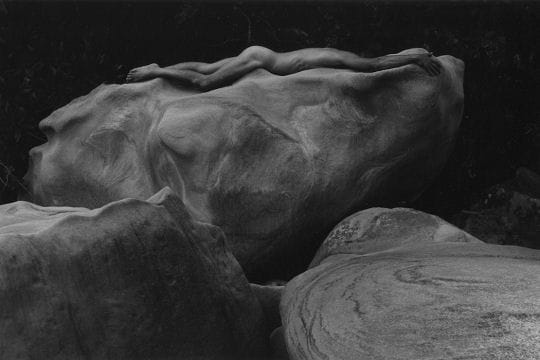
L'artiste japonaise photographe Yuriko Takagi découpe le monde des paysages terrestres en deux grandes catégories, les paysages secs, arides et les paysages gras, humides. Attirée par le minéral et les altitudes élevées, elle traque jusqu'à l'obsession l'intime d'un paysage, le point de fusion entre l'être humain et son environnement naturel. Ses photographies argentiques en noir et blanc dont elle réalise elle-même les tirages rendent compte de son attention extrême aux textures et à leurs différentes formes d'expression. Tandis que les corps se font paysage, les paysages se font peau. Les codes de la représentation du nu et du paysage sont profondément renouvelés par la relation directe qu'elle noue avec les locaux dont elle ne parle pas la langue mais qui semblent comprendre sa démarche sans le recours au langage des mots. C'est qu'elle s'adresse à l'intime de chacun d'entre nous, ce qui profondément nous ancre à la terre que nous habitons, à cette loi de gravité que nous partageons et qui nous rappelle que notre terre est un corps céleste. Depuis plus de quinze ans l'artiste travaille sur ce projet, Birth of Gravity et parcourt le monde* à la recherche de correspondances remarquables entre des présences humaines et des identités géologiques. Son travail fait partie de collections prestigieuses comme le Musée national d'art moderne de Tokyo (MOMAT) ou le Musée d'art contemporain de Shangaï(MOCA). Très connue pour ses photographies de mode, notamment pour sa série pour Issey Miyake, Pleats Please Travel Through The Planet, son travail personnel n'avait encore jamais été  montré en France.   

*Argentine, Bolivie, Chili, Chine, Inde, Indonesie, Hawaï, Namibie, Okinawa


14 rue du Perche
75003 Paris
15 11 2012 - 15 01 2013

contact: Laura de Pontcharra


14.8.12

The Sublime in Contemporary Art. Hiroshi Sugimoto's Views of the Invisible


"Every time I view the sea, I feel a calming sense of security, 
as if visiting my ancestral home; I embark on a voyage of seeing."

Hiroshi Sugimoto


Black Sea, Ozuluce, 1991. Gelatin silver print, edition 14/25, 16 5/8 x 21 5/16 inches (42.2 x 54.1 cm) . Solomon R. Guggenheim Museum, New York,Gift, The Bohen Foundation  2001.270. © 1991 Hiroshi Sugimoto
Tasman Sea, Ngarupupu, 1990. Gelatin silver print, edition 5/25, 16 9/16 x 21 3/8 inches (42.1 x 54.3 cm) . Solomon R. Guggenheim Museum, New York,Gift, The Bohen Foundation  2001.268. © 1990 Hiroshi Sugimoto 
Tyrrhenian Sea, Amalfi, 1990. Gelatin silver print, edition 11/25, 16 1/2 x 21 3/8 inches (41.9 x 54.3 cm). Solomon R. Guggenheim Museum, New York,Gift, The Bohen Foundation  2001.269. © 1990 Hiroshi Sugimoto
Ligurian Sea, near Saviore,1993.Silver Gelatin Print 182,4 x 154,2 cm © Hiroshi Sugimoto/ courtesy of Gallery Koyanagi . Exhibited in Le temps retrouvé, Collection Lambert, 2011


When I saw these huge gelatin silver prints of Sugimoto's seascapes series for the first time last year at the Collection Lambert during the exhibition Le temps retrouvé I felt literally drawn into Sugimoto's image, lost into a sea of meditation. Since then I read and thought much about his work. I grew really enthusiastic when I learnt that he began working in 1980 on an ongoing series of photographs of the sea and its horizon, Seascapes, in locations all over the world. The black-and-white pictures are all exactly the same size, bifurcated exactly in half by the horizon line. How can he drive the viewer to want always to look closer at his seas of "time exposed"?  His use of an 8×10 large-format camera and extremely long exposures  up to three hours enables him to explore both physical and spiritual boundary as well as  the phenomenology of the picture plane.  
While deeply metaphysical and existential these photographs are a meditation on photography itself.


Hiroshi Sugimoto, self-portrait 2003


16.4.12

Un peu de douceur. Le petit monde de Yumiko Froehlich


Par delà la petite porte


L’autre jour, j’ai découvert une petite porte dans un coin de ma chambre.
Je me suis approchée et il y avait une minuscule famille en train de prendre le thé !
Ils avaient l’air contents de me rencontrer. J’ai même reçu un petit morceau de gâteau au fromage.
Ce matin,  je suis retournée voir dans le coin, mais la porte n’y était plus ! Avais-je donc rêvé ?
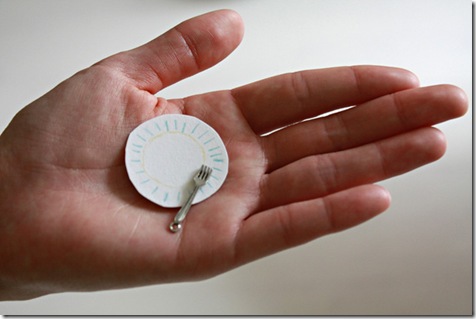
Mais dans ce cas, d’où viennent la petite fourchette et l’assiette en carton ?


Aujourd'hui j'ai découvert le blog de cette jeune artiste japonaise  installée à Paris et j'ai tant été sous le charme que je l'ai parcouru en entier comme un album. Il y a des histoires faites avec presque rien. Régression totale, j'avais cinq ans, peut-être moins et j'ai ressenti le même frisson que j'avais oublié et que je me suis rappelée quand je jouais, cachée dans un placard, à me raconter des histoires  avec de minuscules poupées de paille. Pour entrer dans son blog, c'est par ici, Yumiko Froehlich


 ©2012 Yumiko Froehlich

18.2.12

Yayoi Kusama's Obsessions


Yayoi Kusama's " The obliteration room" 2011 GOMA Queensland, Australia 

I am happy to participate in Yayoi Kusama's interactive project "The obliteration room" by re-blogging the installation; those millions of posts oblitering the net like so many dots! There are currently two major exhibitions of Yayoi Kusama's work, one at Queensland Gallery GOMA in Australia, "Look now, see forever" and one at the Tate Gallery, London until 5 June 2012. 

17.2.12

Jo Nagasaka's Flat Tables


Jo Nagasaka "Flat tables" for OPTIONS


63.02º, built in a densely residential area in Tokyo

A minimalistic  "green living" home in Tokyo. More about it via arch daily

Japanese architect Jo Nagasaka of schemata architecture office ltd began working on "flat tables" in 2009 by adding colorful epoxy resin to antique tables. He has now developed five "flat tables" for Dutch contemporary department store OPTIONS.