Showing posts with label House. Show all posts

1.11.15

De Vent et d'Eau


Forever – is composed of Nows – 
‘Tis not a different time – 
Except for Infiniteness – 
And Latitude of Home –


Chacun sent confusément que les lieux sont habités. De toute éternité. Avant que les murs ne se dressent et ne se mettent à respirer, il y avait déjà là, à cet endroit unique repéré par la géographie qui est l'écriture de la terre, des traces cachées dans d'autres traces, le tulle du passé, les fils de quelque émotion oubliée, une faille par laquelle s'insinuent d'autres plis du monde. Il y a toujours quelque chose de déjà là avec lequel il nous faut composer pour continuer à écrire nos petites histoires qui rend les murs que nous hantons profonds et inépuisables, irréductibles à jamais à un maintenant qui nous échappe. 


Petit billet écrit en dialogue avec mon amie Marianne, avec laquelle nous aimons tant à croiser nos regards. 


Image © David Lynch, Divided, undated, Watercolour. Photography: Brian Forrest, Naming at Middlesbrough Institute of Modern Art 2014-2015


31.5.12

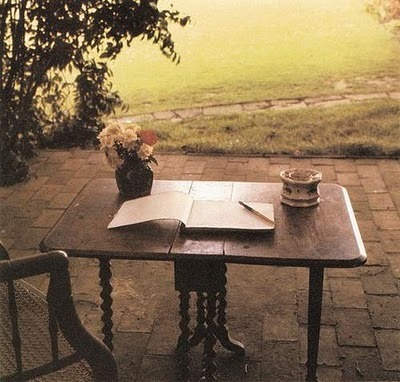
Maison atmosphérique. Virginia Woolf 's Retreat at Monk's House


Virginia Woolf seems to have been rather of two-minds about literary pilgrimages. She warned us against them. "A writer's country is a territory within his own brain; and we run the risk of desillusionment if we try to turn such phantom cities into tangible brick and mortar." Nethertheless she  confessed that she herself had performed such journeys "dozens of times." She visited Keats' and Carlyle's house, wrote an essay on the Brontës and Haworth parsonage and confessed how she could not refrain from trying to conjure up the figure of Doctor Johnson while visiting Dough Square. Her vision of place gives her a sense of connection to the ghostly presence of the human spirits. She liked to choose a darkish day for her visits "lest the ghosts of the dead should discover us." For her, the place completes the self, it is crucial to the activity of the imagination and to the sense of fusing with things. Mrs Dalloway's epiphany gives an idea of Virginia Woolf's transcendental belief. 


 “Clarissa had a theory in those days - they had heaps of theories, always theories, as young people have. It was to explain the feeling they had of dissatisfaction; not knowing people; not being known. For how could they know each other? You met every day; then not for six months, or years. It was unsatisfactory, they agreed, how little one knew people. But she said, sitting on the bus going up Shaftesbury Avenue, she felt herself everywhere; not 'here, here, here'; and she tapped the back of the seat; but everywhere. She waved her hand, going up Shaftesbury Avenue. She was all that. So that to know her, or any one, one must seek out the people who completed them; even the places. Odd affinities she had with people she had never spoke to, some women in the street, some man behind a counter - even trees, or barns. It ended in a transcendental theory which, with her horror of death, allowed her to believe, or say that she believed (for all her scepticism), that since our apparitions, the part of us which appears, are so momentary compared with the other, the unseen part of us, which spreads wide, the unseen might survive, be recovered somehow attached to this person or that, or even haunting certain places, after death. Perhaps - perhaps.”
Mrs Dalloway, 135 


How strange that the water element be ever so present in Monk's House; the rain comes in under the back door 'when it rained heavily the water would stream across the kitchen and disappear through a crack under the sink'-just as it did on the first night of the couple's installation in Rodmell. The original Thirties shade of apple green that Virginia Woolf loved so much, reverberating the plants curling around the windows and casting moving shadows on the walls gives an uncanny sensation of being in an underwater cave.* Virginia Woolf drowned herself in the nearby river Ouse where she used to wander.


*Caroline Arber's photographs infused with vibrant green light
 capture the atmosphere of the house with emotion. 


 From The Lighthouse To Monk's House:
 A Guide to Virginia Woolf's Literary Landscapes, 2003.


Rodmell in Virginia Woolf's books


Sappho and Pluto at Monk's House, Virginia Woolf Monk's House photograph album, 
 Houghton Library Catalogue, Harvard College


To visit the place: 


Monk's House, Rodmell, Lewes, E. Sussex BN7 3HF at National Trust Website


12.3.12

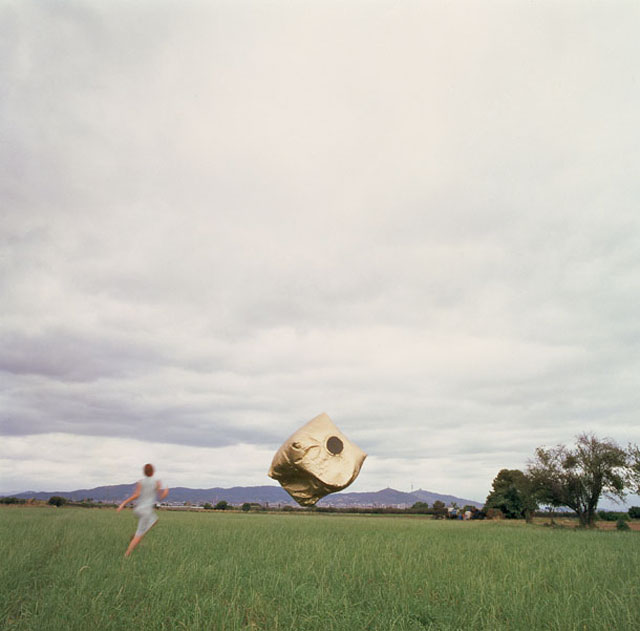
Simplicity (1) Nomadic House by Martin Azua


 1999 / Photographs Daniel Riera


Barcelona designer  Martín Azúa challenges the idea of the private home with the Basic House - an inhabitable volume that is "foldable, inflatable and reversible." Made from metalized polyester, the Basic House is a shelter small enough to fit in your pocket, allowing you to break away from the imprisonment of material ties and to reconnect to some primal instinct. 


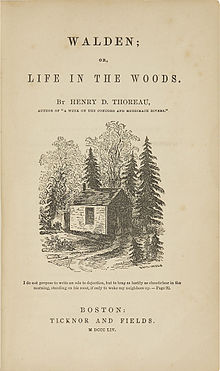
"We may imagine a time when, in the infancy of the human race, some enterprising mortal crept into a hollow in a rock for shelter. Every child begins the world again, to some extent, and loves to stay outdoors, even in wet and cold. It plays house, as well as horse, having an instinct for it. Who does not remember the interest with which, when young, he looked at shelving rocks, or any approach to a cave? It was the natural yearning of that portion, any portion of our most primitive ancestor which still survived in us. From the cave we have advanced to roofs of palm leaves, of bark and boughs, of linen woven and stretched, of grass and straw, of boards and shingles, of stones and tiles. At last, we know not what it is to live in the open air, and our lives are domestic in more senses than we think. From the hearth the field is a great distance. It would be well, perhaps, if we were to spend more of our days and nights without any obstruction between us and the celestial bodies, if the poet did not speak so much from under a roof, or the saint dwell there so long. Birds do not sing in caves, nor do doves cherish their innocence in dovecots. " Henry David Thoreau Walden; or, Life in The Woods, 1854.